Field manual · Fermentation
Sourdough starter guide
A feeding ratio is starter : flour : water by weight. The larger the fresh feed relative to the carry-over, the longer the starter takes to peak and the less acidic it becomes.
Feeding ratios and peak timing
| Ratio (S:F:W) | Approx. peak | Use |
|---|---|---|
| 1:1:1 | 4–6 h at 24 °C | Daily feeding of an established, active starter; fastest rise. |
| 1:2:2 | 6–8 h at 24 °C | Standard morning-to-afternoon build for a same-day dough. |
| 1:5:5 | 8–12 h at 24 °C | Overnight levain; dilutes acidity for a milder crumb. |
| 1:10:10 | 12–16 h at 24 °C | Warm kitchens (28 °C+) or a full working-day hold. |
| 1:2:1 | 10–14 h at 24 °C | Stiff (50%) starter; slower, more acetic, stores well. |
Timings assume a mature wheat starter fed with strong white flour. Every 5 °C drop roughly doubles time to peak; 20–30% wholemeal or rye in the feed shortens it.
Reading the starter
- Peak: domed top, 2–3× volume, open web of bubbles. Use for levain or dough now.
- Past peak: collapsed dome, streaks on the jar, sharp acetone smell. Feed at a higher ratio.
- Sluggish: under 1.5× rise in 12 h. Feed 1:1:1 twice daily at 26 °C for two days.
- Hooch: grey liquid layer means hunger, not failure. Pour off or stir in, then feed.
Starter feeding calculator
- Ripe starter
- 20 g
- Flour
- 100 g
- Water
- 100 g
- Total
- 220 g
- Feed hydration
- 100%
Add a few grams over the levain your recipe needs — some always stays on the jar. Weigh water at 26–28 °C for a predictable peak.
Dough fermentation timeline
Bulk time is driven by dough temperature and inoculation (ripe starter as a percentage of flour weight). Model reference: 24 °C at 20% completes bulk in about 5 h; each 5 °C (9 °F) drop doubles it.
- Estimated bulk fermentation
- 5 h 00 min
- Stretch-and-fold window
- First 2 h 00 min
- Sets of folds (every 30 min)
- 4
- Target volume rise at end of bulk
- 53%
Warm dough keeps fermenting during shaping, so it is stopped earlier (about 30% rise at 28 °C) than cool dough (about 75% at 20 °C). Treat times as estimates; the dough's rise, dome and jiggle decide.
Proofing and retardation
| Stage | Conditions | Poke test | Acidity & blistering | Scoring readiness |
|---|---|---|---|---|
| Room-temperature final proof | Ambient 21–24 °C, 1–3 h | Dent springs back slowly and leaves a shallow mark. | Even, mild sourness; few blisters; thinner crust. | Score immediately after turning out; dough is soft — use a shallow 30° cut. |
| Cold retard | Refrigerator 3–5 °C, 12–24 h | Firm dough; dent recovers about halfway — bake straight from cold. | Higher acetic acidity; fine surface blistering; deeper colour. | Ideal: cold, taut skin holds a clean ear with a 5–8 mm deep cut. |
| Over-proofed (either method) | Beyond the window | Dent does not recover; surface may deflate or tear. | Pale, flat crust; blisters collapse. | Blade drags; scores spread rather than open. Bake in a tin or reshape. |
Under- vs over-fermentation diagnostics
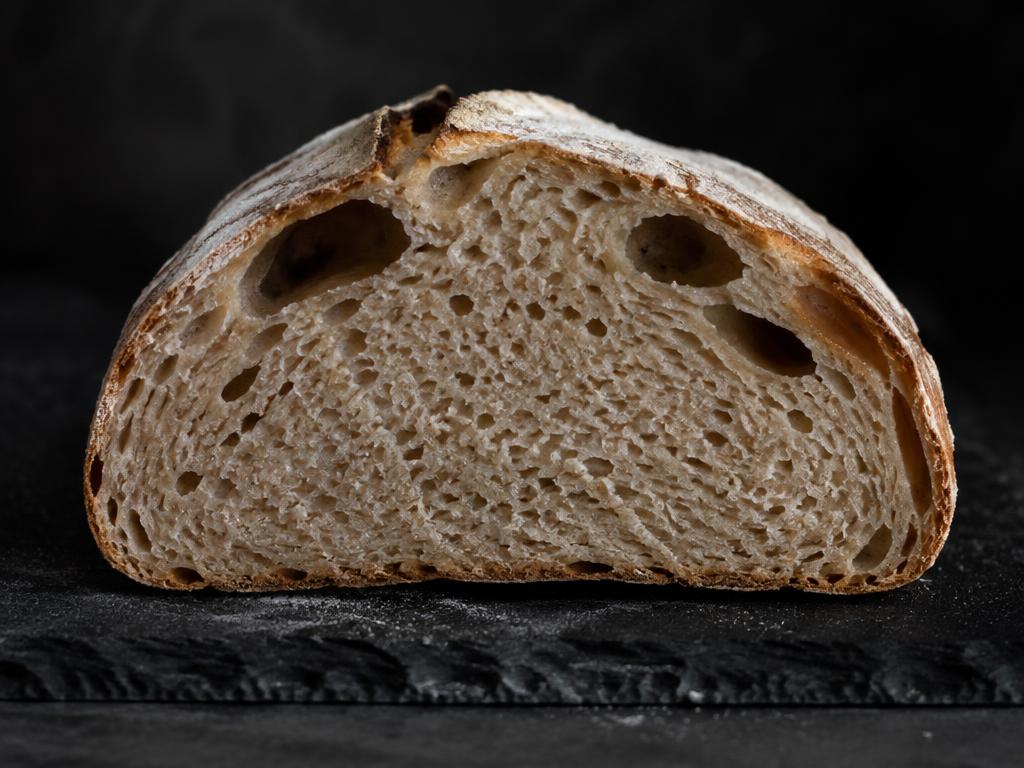
Under-fermented
- Crumb
- Dense, tight crumb with a few large irregular tunnels under the crust; gummy streaks.
- Crust
- Dark, thick crust from residual sugar; can look over-baked.
- Oven spring
- Explosive, wild oven spring; scores burst or loaf splits at the side.
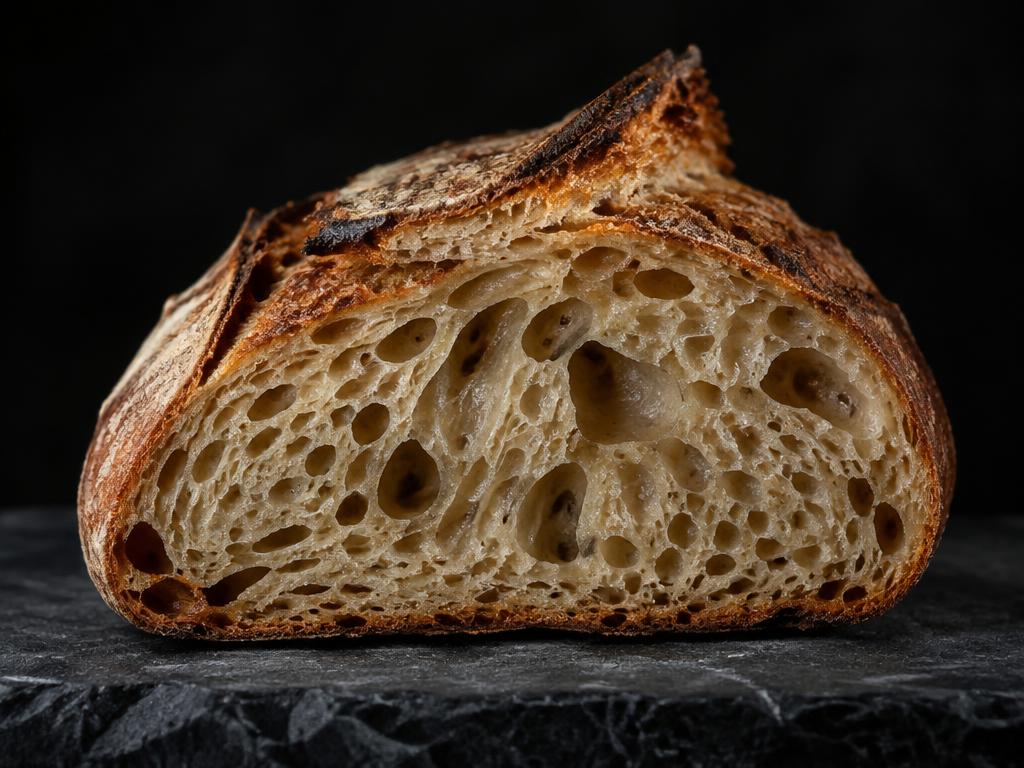
Correctly fermented
- Crumb
- Even, open, glossy alveoli; cell walls thin and translucent.
- Crust
- Deep mahogany with fine blistering; crisp shell.
- Oven spring
- Controlled rise; ear lifts cleanly along the score.
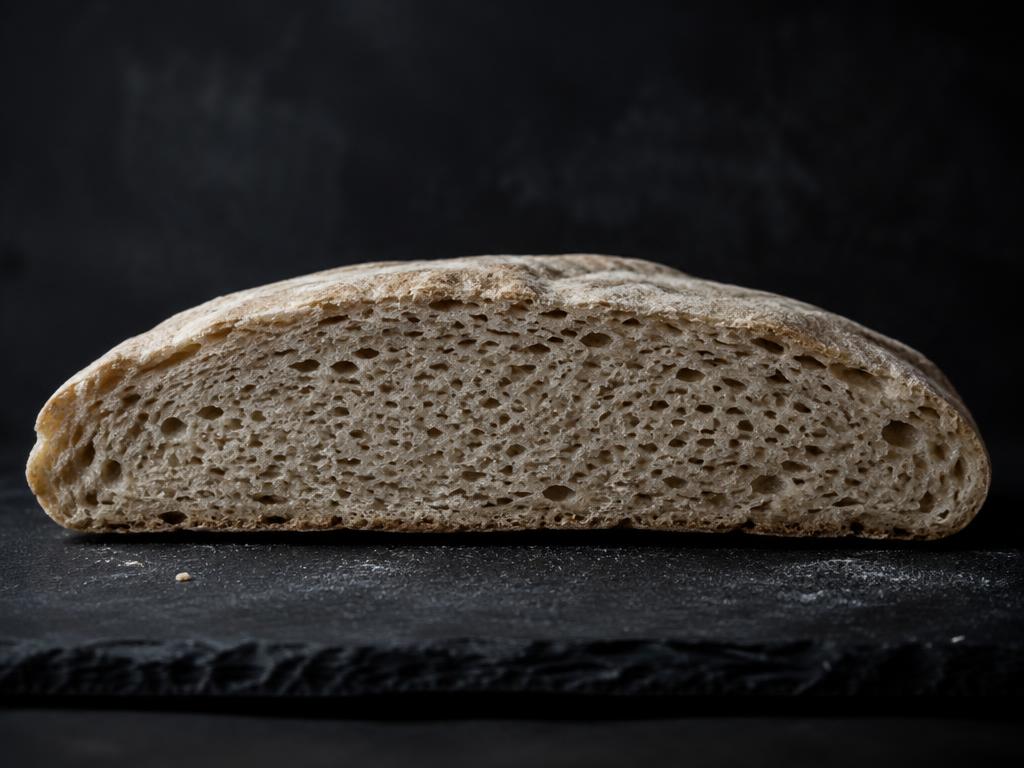
Over-fermented
- Crumb
- Uniform small holes, crumb sinks; sour, slack, possibly sticky.
- Crust
- Pale, matte crust — sugars consumed by fermentation.
- Oven spring
- Little or no spring; loaf spreads flat and scores barely open.